
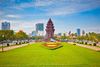
Phnom Penh
What you need to know before you go
Phnom Penh is the biggest and wealthiest city in Cambodia. It’s also the cultural, commercial and political center of the country. Covering an area of 345 sq km, Phnom Penh is located in the south-central region of Cambodia, at the confluence of the Tonle Sap, Mekong and Bassac rivers.
The bustling capital offers extensive cultural and historical attractions, including temples, museums, the Royal Palace. Accommodations range from simple guesthouses to 5-star hotels, attracting travelers from all over the world. Phnom Penh also has a diverse dining scene as well as a vibrant and varied nightlife.
Hvad du kan se og gøre i Phnom Penh
Udvalgte oplevelser og sjove idéer
Phnom Penh offers plenty of things to see and do – you’ll often be surprised when making a stop in the Cambodian capital heading to or from Siem Reap’s Angkor Wat. Those who don’t make a stop off in Phnom Penh will often miss out on so many interesting historical, cultural and environmental attractions in the city. It’s not all about the Khmer Rouge or Cambodia’s tragic past either. Khmer-era temples, wildlife sanctuaries, theatrical performances... Læs mere

18 Best Things to Do in Phnom Penh
Phnom Penh offers plenty of things to see and do – you’ll often be surprised when making a stop in the Cambodian capital heading to or from Siem Reap’s Angkor Wat. Those who don’t make a stop off in Phnom Penh will often miss out on so many interesting historical, cultural and environmental attractions in the city. It’s not all about the Khmer Rouge or Cambodia’s tragic past either. Khmer-era...
Det kan du opleve i Phnom Penh
Hvad og hvor du bør spise i Phnom Penh
16 Best Restaurants in Phnom Penh
Phnom Penh restaurants are emerging as culinary surprise packages to match larger and more established Southeast Asian neighbours. Traditional Khmer street food surrounds the footpaths of haute cuisine restaurants, and cafés and bistros of every variety sprout in alleys and old colonial houses. Of course you’ll want to try the local food while you’re here, but don’t miss the chance to let Phnom...
Hvor du kan shoppe, og hvad du bør købe i Phnom Penh
20 Best Shopping Experiences in Phnom Penh
Phnom Penh shopping experiences may not be on par with shopping destinations in Southeast Asia like Bangkok or Singapore, but it’s something you shouldn’t dismiss. The city has a lot to offer the discerning shopper, as well as souvenir and bargain hunters. It’s not just about steamy local markets or cheap knock-off bags and watches any more. Local markets (you can find a phsar on almost every...

Bliv klogere på Phnom Penh efter kategori
Også populært i Cambodia
Frequently Asked Questions
What is the best way to get around Phnom Penh?
The best way to get around Phnom Penh is by tuk-tuks and ride-hailing apps, which are convenient for navigating busy city streets. Taxis are also available for longer trips, while walking is ideal for exploring the riverfront, local markets, and historical sites in the city center.
When is the best time to visit Phnom Penh?
The best time to visit Phnom Penh is from November to February, when cooler temperatures and minimal rainfall make sightseeing and walking around the city more comfortable. This period is perfect for exploring cultural sites, riverfront promenades, and outdoor markets.
What are the must-see attractions in Phnom Penh?
Must-see attractions in Phnom Penh include the Royal Palace, Silver Pagoda, and Wat Phnom. Visitors can also enjoy the riverside promenade and Central Market, which showcase the city’s cultural heritage and scenic river views.
Which are the best neighborhoods in Phnom Penh?
The best neighborhoods in Phnom Penh offer a mix of convenience and cultural charm. The Riverside area is vibrant and scenic, BKK1 has cafes, shops, and modern amenities, and Daun Penh features historic streets, temples, and bustling markets.
What are the best cultural experiences in Phnom Penh?
Top cultural experiences in Phnom Penh include exploring royal architecture at the Royal Palace, strolling through local markets, visiting museums and pagodas, and participating in traditional Khmer performances and cultural activities that highlight the city’s heritage.